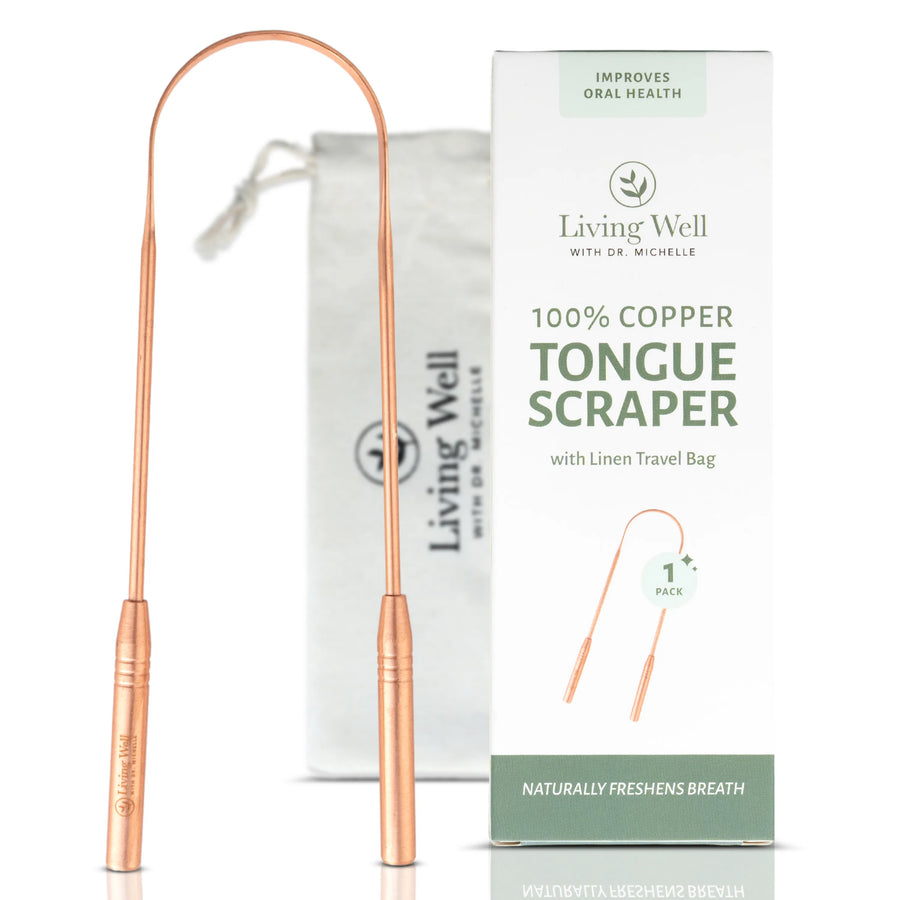
Copper vs. Stainless Steel Tongue Scraper: Which Is Actually Better?

Copper vs. Stainless Steel Tongue Scraper: Which Is Actually Better?

There are a lot of ways to support your oral health—but if tongue scraping isn’t part of your daily routine, you're missing a small but mighty habit that can make a big difference.

As a holistic dentist, I’ve helped thousands of patients build better oral hygiene routines, and one of the most common questions I get is: “Should I use a stainless steel or copper tongue scraper?

Let’s walk through the benefits of both—and why I personally reach for my copper tongue scraper every single morning.

Building an effective teeth cleaning routine can also help improve overall oral health.

Why Tongue Scraping Should Be in Your Routine

Even if you brush and floss religiously, your tongue is still harboring:

  • Bacteria
  • Dead cells
  • Food particles
  • Debris that contributes to bad breath and poor oral hygiene

This buildup can coat the tongue’s surface, dulling your sense of taste and contributing to gum disease and other health issues. Tongue scraping helps remove bacteria and clear the entire surface of your tongue.

Brushing your tongue with a toothbrush (even a soft-bristled one) doesn’t do nearly as effective a job. Scrapers are specially designed to remove buildup gently, without triggering your gag reflex.

What Makes a Great Tongue Scraper?

Whether you’re just starting tongue scraping or upgrading your current tool, here’s what I recommend looking for:

  • Durable material: It should last years with proper care.
  • Effective shape: A U-shaped design allows you to cover the full surface of your tongue comfortably.
  • Safe and non-toxic: Avoid plastic ones—metal tongue scrapers (especially copper) are cleaner, sturdier, and more effective.
  • Comfortable handle and flexibility: Gently scraping without cutting or scraping too harshly is key.

These features help make sure you're using the best tongue scraper for improved oral hygiene without irritation or extra effort.

Copper Tongue Scrapers: My Personal Favorite

Copper tongue scrapers have been used for centuries in Ayurvedic practices, and modern science is catching up with why they work so well.

Why I Love Copper:

  • Antimicrobial properties: Copper has natural antimicrobial properties that help inhibit bacterial growth. That means it not only helps you clean your tongue—it also helps keep itself clean.
  • Sustainable and eco-friendly: It’s long-lasting, recyclable, and part of a sustainable oral care routine.
  • Holistic and traditional: I appreciate solutions that connect time-tested practices with modern understanding of oral health.

Click below to check out my personal Copper Tongue Scraper — It’s the one I use every day and recommend to my patients.

TongeScraper

Copper Tongue Scraper

4.9

Banish bad breath and gunk with Living Well Copper Tongue Scraper! Dr. Michelle’s design ensures instant freshness and improved oral health – a quick solution for a confidence boost! The anti-microbial properties of the copper material help eliminate bad bacteria while preserving beneficial bacteria.

Copper’s antimicrobial properties are highly effective, killing over 99.9% of E. coli microbes within 1–2 hours. Pure copper power in a ‘U’ shape! Elevate your daily oral hygiene routine with Dr. Michelle’s design.

$7.99

View Product

Stainless Steel Scrapers: The Pros and Cons

Stainless steel tongue scrapers are widely available, often marketed as convenient and modern. They’re also rust-proof and dishwasher safe, which is great—but they don’t offer the same benefits copper does.

Pros:

  • Durable and sleek
  • Easy to clean
  • More affordable upfront

Cons:

  • No antimicrobial properties
  • Can still accumulate bacteria
  • Doesn’t align with natural or Ayurvedic practices

If you're trying to decide between a stainless steel scraper vs. copper one, think about whether you're just looking for function or if you also care about natural, sustainable, and health-enhancing materials.

Ancient Practice, Modern Science

Tongue scraping has been practiced for thousands of years—especially in Ayurvedic health systems—as a way to remove toxins (called "ama") from the body. Today, we know that a coated tongue is often a sign of bacterial overgrowth, poor digestion, or imbalanced oral flora.

Modern research confirms what Ayurvedic practitioners have known all along: removing that coating improves breath, supports overall health, and plays a key role in a balanced oral hygiene routine.

Can Tongue Scraping Help with Bad Breath and Taste?

Yes! Removing the gunk that lives on your tongue leads to:

  • Fresher breath
  • Improved taste
  • A cleaner, healthier mouth

Many of my patients say they didn’t realize how much their taste buds were muted until they started scraping. Plus, your morning breath doesn’t have to be quite so… morning-y.

This simple practice also supports digestion—since your mouth is the first part of your digestive system—and contributes to a positive impact on your overall wellness.

How to Properly Use and Care for Your Tongue Scraper

Using a tongue scraper is easy and takes less than 30 seconds.

How to Use It:

  1. Stick your tongue out in the mirror.
  2. Place the scraper at the back of your tongue (not too far—don’t trigger your gag reflex).
  3. Gently pull forward, scraping the entire surface.
  4. Rinse and repeat 2–3 times.
  5. Rinse your scraper and let it dry properly.

Caring for It:

  • Copper scrapers may develop a natural patina—this is normal.
  • You can rinse it with water after each use - optionally you can clean it weekly with lemon juice and salt if you want to restore its shine.
  • Store in a dry area to preserve the durable material.

Copper vs. Stainless Steel: A Quick Recap

Ready to Upgrade Your Oral Hygiene?

If you’re still using a steel tongue scraper, or worse—skipping scraping altogether—this is your sign to level up.

Try my Copper Tongue Scraper and start your day with a cleaner mouth, fresher breath, and a tool that’s as effective as it is beautiful.

Because when it comes to oral health, sometimes it’s the small changes that make the biggest difference.

TongeScraper

Copper Tongue Scraper

4.9

Banish bad breath and gunk with Living Well Copper Tongue Scraper! Dr. Michelle’s design ensures instant freshness and improved oral health – a quick solution for a confidence boost! The anti-microbial properties of the copper material help eliminate bad bacteria while preserving beneficial bacteria.

Copper’s antimicrobial properties are highly effective, killing over 99.9% of E. coli microbes within 1–2 hours. Pure copper power in a ‘U’ shape! Elevate your daily oral hygiene routine with Dr. Michelle’s design.

$7.99

View Product

Final Thoughts: Why This One Simple Practice Matters

Tongue scraping may seem small, but it supports your oral health, your digestion, your breath, and your confidence.

And in my experience, it’s often the little things—like gently scraping your tongue with a copper tool each morning—that help you feel more energized, more in control, and yes, a little bit fresher.

Stainless Steel Scrapers: The Pros and Cons

Stainless steel tongue scrapers are widely available, often marketed as convenient and modern. They’re also rust-proof and dishwasher safe, which is great—but they don’t offer the same benefits copper does.

Pros:

  • Durable and sleek
  • Easy to clean
  • More affordable upfront

Cons:

  • No antimicrobial properties
  • Can still accumulate bacteria
  • Doesn’t align with natural or Ayurvedic practices

If you're trying to decide between a stainless steel scraper vs. copper one, think about whether you're just looking for function or if you also care about natural, sustainable, and health-enhancing materials.

Ancient Practice, Modern Science

Tongue scraping has been practiced for thousands of years—especially in Ayurvedic health systems—as a way to remove toxins (called "ama") from the body. Today, we know that a coated tongue is often a sign of bacterial overgrowth, poor digestion, or imbalanced oral flora.

Modern research confirms what Ayurvedic practitioners have known all along: removing that coating improves breath, supports overall health, and plays a key role in a balanced oral hygiene routine.

Can Tongue Scraping Help with Bad Breath and Taste?

Yes! Removing the gunk that lives on your tongue leads to:

  • Fresher breath
  • Improved taste
  • A cleaner, healthier mouth

Many of my patients say they didn’t realize how much their taste buds were muted until they started scraping. Plus, your morning breath doesn’t have to be quite so… morning-y.

This simple practice also supports digestion—since your mouth is the first part of your digestive system—and contributes to a positive impact on your overall wellness.

How to Properly Use and Care for Your Tongue Scraper

Using a tongue scraper is easy and takes less than 30 seconds.

How to Use It:

  1. Stick your tongue out in the mirror.
  2. Place the scraper at the back of your tongue (not too far—don’t trigger your gag reflex).
  3. Gently pull forward, scraping the entire surface.
  4. Rinse and repeat 2–3 times.
  5. Rinse your scraper and let it dry properly.

Caring for It:

Feature Copper Tongue Scraper Stainless Steel Tongue Scraper
Antimicrobial properties ✅ Naturally antimicrobial ❌ Not antimicrobial
Sustainability ✅ Part of sustainable oral care ✅ Recyclable, but not as eco-friendly
Cleaning ✅ Easy to rinse, natural patina ✅ Dishwasher safe
Health benefits ✅ Supports holistic wellness ⚠ Functional, but no added health perks
Feel & flexibility ✅ Gently scraping with flexible shape ⚠ Slightly more rigid