Is Fluoride Toothpaste Bad for You? A Dentist's Honest Take
Flip your toothpaste over and read the back of the tube. Right there, under the flavor and the fluoride claim, most brands print a warning: if you swallow more than a pea sized amount, contact poison control.
That single line is why so many people start asking a fair question. If fluoride toothpaste is something we put in our mouths twice a day, every day, from childhood on, why does it come with a poison control warning at all?
It is a good question, and it deserves a clear, honest answer instead of hype in either direction. As a dentist, I want to walk you through what fluoride toothpaste actually does, what the research does and does not say, and the fluoride free option I use with my own family.
Start with the warning label on the tube
The warning is real, and it is required by the U.S. Food and Drug Administration on any toothpaste that contains fluoride. It exists because fluoride is an active drug ingredient, and swallowing too much of it at once can cause nausea and stomach upset, especially in small children who tend to swallow toothpaste instead of spitting it out.
For most adults who brush and spit, the amount that stays behind is small. The label is not proof that fluoride toothpaste is dangerous in normal use. But it is a fair reminder that this is not just a cosmetic. It is a product with a dose, and dose is exactly what the bigger conversation is about.
What fluoride toothpaste actually does
Let me give fluoride its due, because the science here is real. When fluoride sits on the surface of a tooth, it helps form a compound called fluorapatite, which is more resistant to the acids that wear enamel down. That is why decades of dental guidance have leaned on it, and why groups like the American Dental Association still recommend it.
So fluoride can help make the outer surface of enamel more acid resistant. If you are using a fluoride toothpaste today, you are not doing something reckless.
So is fluoride toothpaste bad for you?
Here is my honest answer. For a healthy adult who brushes and spits, fluoride toothpaste is a low exposure, and the warning label is mostly about not swallowing the tube. The louder health questions in the research are about much higher, whole body exposure, and most of that comes from fluoridated drinking water, not from the dab of toothpaste you rinse away.
That distinction matters, so let me show you what the studies genuinely found before we talk about alternatives.
What the research actually says about fluoride and health
Over the last few years, several respected sources have taken a closer look at fluoride and the developing brain. It is worth being precise about what they concluded, because the headlines have run far ahead of the fine print.
- In 2024, the U.S. National Toxicology Program concluded, with moderate confidence, that higher fluoride exposure, meaning drinking water above 1.5 mg/L, is associated with lower IQ in children. That is more than double the 0.7 mg/L used in U.S. community water.
- A 2025 meta analysis in JAMA Pediatrics found a similar inverse association across many studies, while noting the evidence was uncertain below 1.5 mg/L and that no studies of this question have been done in the United States.
- A widely cited 2019 JAMA Pediatrics study linked higher fluoride exposure during pregnancy with lower IQ scores in offspring.
Read carefully, these findings center on high, systemic exposure, mostly from water, during pregnancy and early childhood. They are not a study of an adult spitting out toothpaste. That is an important difference, and it is the reason my own concern has always focused on what you swallow, not what you brush with and rinse away.
Even so, the questions are serious enough that some public health leaders are revisiting fluoride policy. Florida's Surgeon General, for example, recommended against community water fluoridation in late 2024. If you want to reduce whole body fluoride, your drinking water is the place to start, and I cover that in my guide on how to remove fluoride from your water.
Why fluoride is handled differently in Europe
You may have heard that fluoride is banned in Europe. That is not quite right, and the real story is more useful. Most of Western Europe simply does not add fluoride to public drinking water. Countries like Germany, Sweden, and the Netherlands decided to leave water alone and let people choose fluoride topically through toothpaste if they want it.
In other words, much of Europe made fluoride an individual choice rather than something added to everyone's water supply. That is the same principle behind a lot of the current debate in the United States, including Utah's move to stop adding fluoride to drinking water.
What else is in conventional toothpaste?
Fluoride is not the only reason people go looking for a cleaner tube. Several common toothpaste ingredients are ones many families simply prefer to avoid:
- Sodium lauryl sulfate (SLS), a foaming agent that can be irritating for some people, especially those prone to canker sores.
- Titanium dioxide, a whitening pigment the European Union no longer permits as a food additive.
- Artificial dyes and sweeteners, which show up in plenty of mainstream toothpastes and are easy to leave out.
None of this means your current toothpaste is harming you. It simply means that if you are already reading the fluoride line on the label, the rest of the ingredient list is worth a look too.

The fluoride free alternative: hydroxyapatite
So if you would rather skip the fluoride question altogether, what do you use instead? My answer is hydroxyapatite, and it is worth understanding why.
Hydroxyapatite is the mineral your teeth are actually made of. Roughly 97 percent of your enamel is hydroxyapatite. So instead of coating the tooth with a different compound, you are giving enamel more of its own building material.
As the comparison above shows, that is the key difference. Fluoride works by hardening the outer surface into fluorapatite. Hydroxyapatite works by remineralizing the enamel with the same mineral it is built from. In practice, that means it can help fill in the microscopic weak spots on enamel, support teeth that feel sensitive, and do it all without a poison control warning on the box.
Why I formulated a fluoride free toothpaste
I did not set out to make toothpaste. I set out to find one I felt good about, and I could not. After years of practicing biological dentistry and researching what enamel actually needs, I wanted a paste built around hydroxyapatite, without fluoride, SLS, or artificial dyes, that still felt and worked like a real toothpaste.
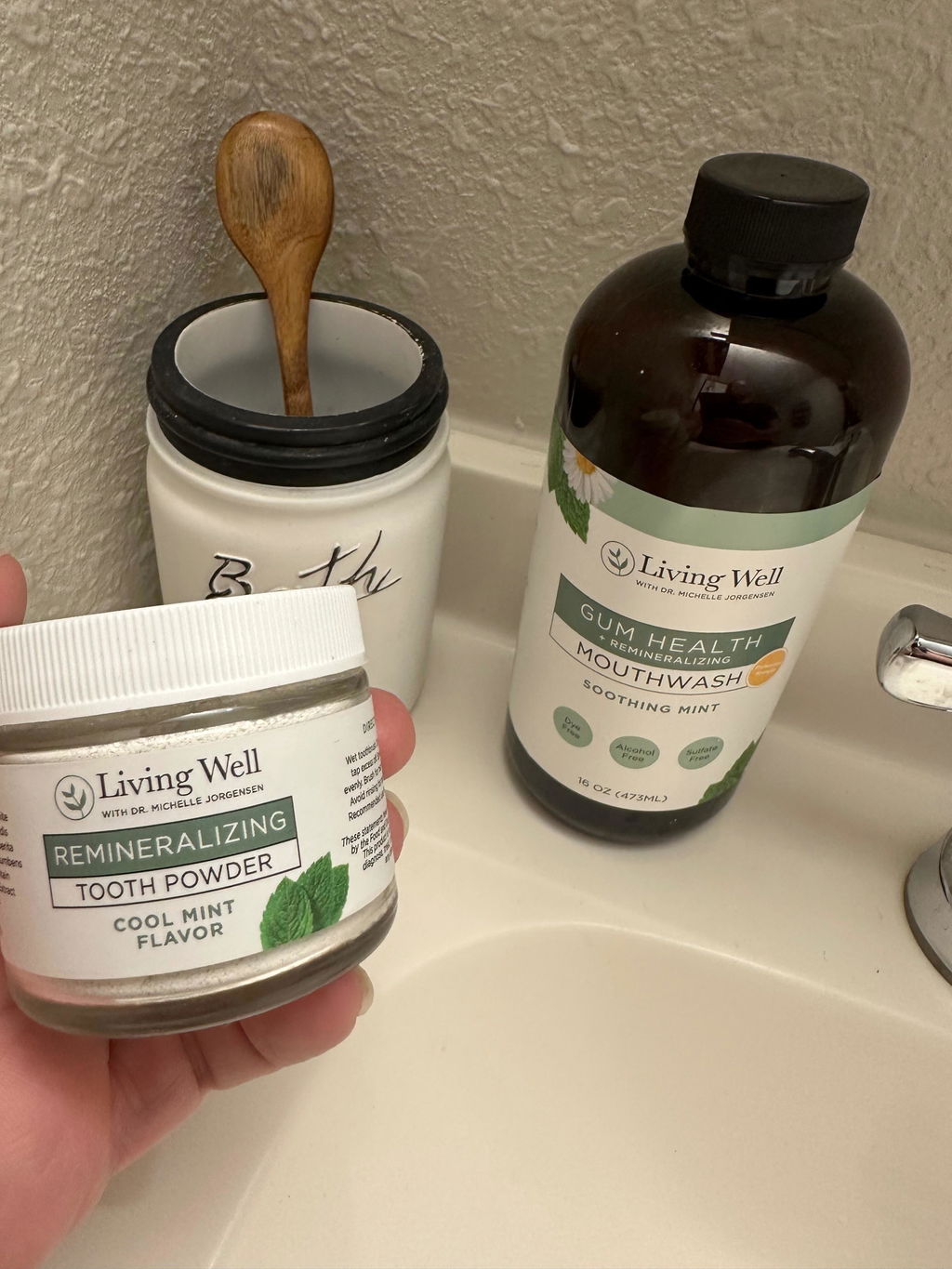
When I could not find it, I made it. My Remineralizing Toothpaste pairs hydroxyapatite with PROtektin to support strong enamel and help keep teeth feeling smooth and less sensitive, with a clean cool mint that my whole family actually likes to use. No poison control warning required.
How to make the switch
Moving to a fluoride free routine is simple, and you do not have to overhaul everything at once.
- Brush twice a day with a hydroxyapatite toothpaste, and let it do its work by spitting without a heavy water rinse.
- Support your enamel from the inside with a mineral rich diet. My free Tooth Remineralization Guide walks through the foods that help.
- Do not forget technique. Even the best toothpaste works better with good habits, which I cover in the secrets of effective teeth cleaning.
Worried about the kids? A hydroxyapatite toothpaste is a reassuring choice precisely because there is no swallowing worry. We make a kids version in a mixed berry flavor for exactly that reason.
Remineralizing Toothpaste with Hydroxyapatite
A fluoride free daily toothpaste built around hydroxyapatite and PROtektin to support strong enamel and smoother, less sensitive teeth. Clean cool mint, no poison control warning.
The bottom line
Fluoride toothpaste is not poison, and if you use it, you are not failing your teeth. But it is fair to notice the warning label, to know that the serious research is really about high systemic exposure, and to realize you have a genuine alternative.
Hydroxyapatite lets you support your enamel with the very mineral it is made of, no fluoride debate required. For a lot of families, including mine, that is simply the easier, calmer choice. If you want to compare both sides in more detail, I break it down in is fluoride good for your teeth, and you can read more about the mineral itself in is hydroxyapatite safe.
References
- National Toxicology Program. Monograph on the State of the Science Concerning Fluoride Exposure and Neurodevelopment and Cognition. 2024.
- Taylor KW, et al. Fluoride Exposure and Children's IQ Scores: A Systematic Review and Meta-Analysis. JAMA Pediatrics. 2025.
- Green R, et al. Association Between Maternal Fluoride Exposure During Pregnancy and IQ Scores in Offspring in Canada. JAMA Pediatrics. 2019.
- Florida Department of Health. State Surgeon General Fluoride Guidance. 2024.
Make the fluoride free switch today
Give your teeth the mineral they are made of. Dentist formulated, family friendly, and free from fluoride, SLS, and artificial dyes.
Ready to skip the fluoride question entirely? Try my fluoride free Remineralizing Toothpaste with hydroxyapatite, or start with the free Tooth Remineralization Guide and give your enamel what it is actually made of.
Dr. Michelle Jorgensen
Dr. Michelle Jorgensen is a dentist, author, speaker, and the founder of Living Well with Dr. Michelle. After practicing traditional dentistry for 10 years, she became seriously ill and discovered she had mercury poisoning from removing mercury fillings for her patients. That journey led her into biological and holistic dentistry, where she has spent more than 15 years since.
She formulated the Living Well line of hydroxyapatite oral care to give families a fluoride free way to care for their teeth with the same mineral enamel is built from.
Is fluoride toothpaste actually bad for you?
For a healthy adult who brushes and spits, fluoride toothpaste is a low exposure and is not considered dangerous in normal use. The bigger health questions in the research are about high, whole body fluoride exposure, mostly from drinking water. If you would rather avoid the question, hydroxyapatite toothpaste is a fluoride free alternative.
Why does fluoride toothpaste have a poison control warning?
The U.S. Food and Drug Administration requires the warning because fluoride is an active drug ingredient, and swallowing a large amount at once can cause nausea or stomach upset, especially in young children. In normal brushing and spitting, the amount left behind is small.
Is fluoride a neurotoxin?
Recent reviews, including a 2024 National Toxicology Program report, associated higher fluoride exposure, above 1.5 mg/L in drinking water, with lower IQ in children. That is more than double the level used in U.S. water, and no studies of this question have been done in the United States. Those findings are about high systemic exposure, not the small amount in spit out toothpaste.
Is fluoride toothpaste banned in Europe?
No. Most of Western Europe simply chooses not to add fluoride to public drinking water, leaving fluoride as an individual choice through toothpaste. It is a difference in water policy, not a ban on fluoride toothpaste.
What can I use instead of fluoride toothpaste?
Hydroxyapatite toothpaste is the most direct alternative. Hydroxyapatite is the mineral your enamel is mostly made of, so it supports remineralization with the tooth's own building block instead of coating it with a different compound.
Is fluoride free toothpaste safe for kids?
A hydroxyapatite toothpaste is a reassuring choice for children specifically because there is no swallowing worry and no poison control warning. It is designed to support their developing enamel gently.